

A brand collaboration is easier to manage when the brief, deliverables, dates, approvals, invoice, and payment all belong to one campaign.
brandmay.studio follows a practical lifecycle:
Lead → Negotiation → Content → Invoice → PaidThe campaign should always help you answer: What should I do next?
Lead
Capture the opportunity
Negotiation
Confirm scope & terms
Content
Deliver and review
Invoice
Send what is owed
Paid
Record receipt
1. Capture the deal early
Create the campaign when the brand conversation becomes worth remembering. You do not need to wait until every term is final.
Add what you know:
- campaign title;
- brand;
- brief or notes;
- start and end dates;
- paid, barter, or free/exposure compensation;
- contract value or barter details;
- deliverables;
- payment milestones.
Unknown details can be updated as negotiation progresses. Avoid inventing dates or payment terms merely to complete the form.

2. Confirm scope before creating content
Turn the agreement into explicit deliverables. For each item, record the format, platform, count, and due date where available.
Examples:
- 1 Instagram Reel
- 3 Instagram Stories
- 1 UGC video for brand channels
Keep usage rights, revision expectations, and other important terms in the campaign brief or contract context. If the campaign was created by the brand, review the invitation’s brief, deliverables, dates, compensation, milestones, barter details, and usage rights before accepting.
3. Work from the next action
During Content, use campaign and deliverable next actions to decide what deserves attention:
- Draft due tomorrow
- Publish draft
- New feedback received
- V2 approved: add live post or proof
Update deliverable state as work progresses. A useful campaign record reflects reality; it should not become a perfect plan that is never updated.
4. Keep approval version-safe
Upload each meaningful draft as a version. Publish only the version you want the brand to review, then share or reuse the review link.
Read comments under the version where they were written. If the brand requests changes on V1, publish V2 after revising. Approval must name the exact approved version.
If the brand claims a workspace, the campaign becomes connected on brandmay.studio. That connection applies to this campaign and its deliverables, not every campaign with the same brand name.
5. Record live content or proof
After approval and posting, add the live URL or proof required by the deliverable. This separates “approved draft” from “work is live.”
Once required deliverables are complete, the next action should move toward invoicing rather than leaving the campaign stuck in Content.
6. Move into the payment cycle
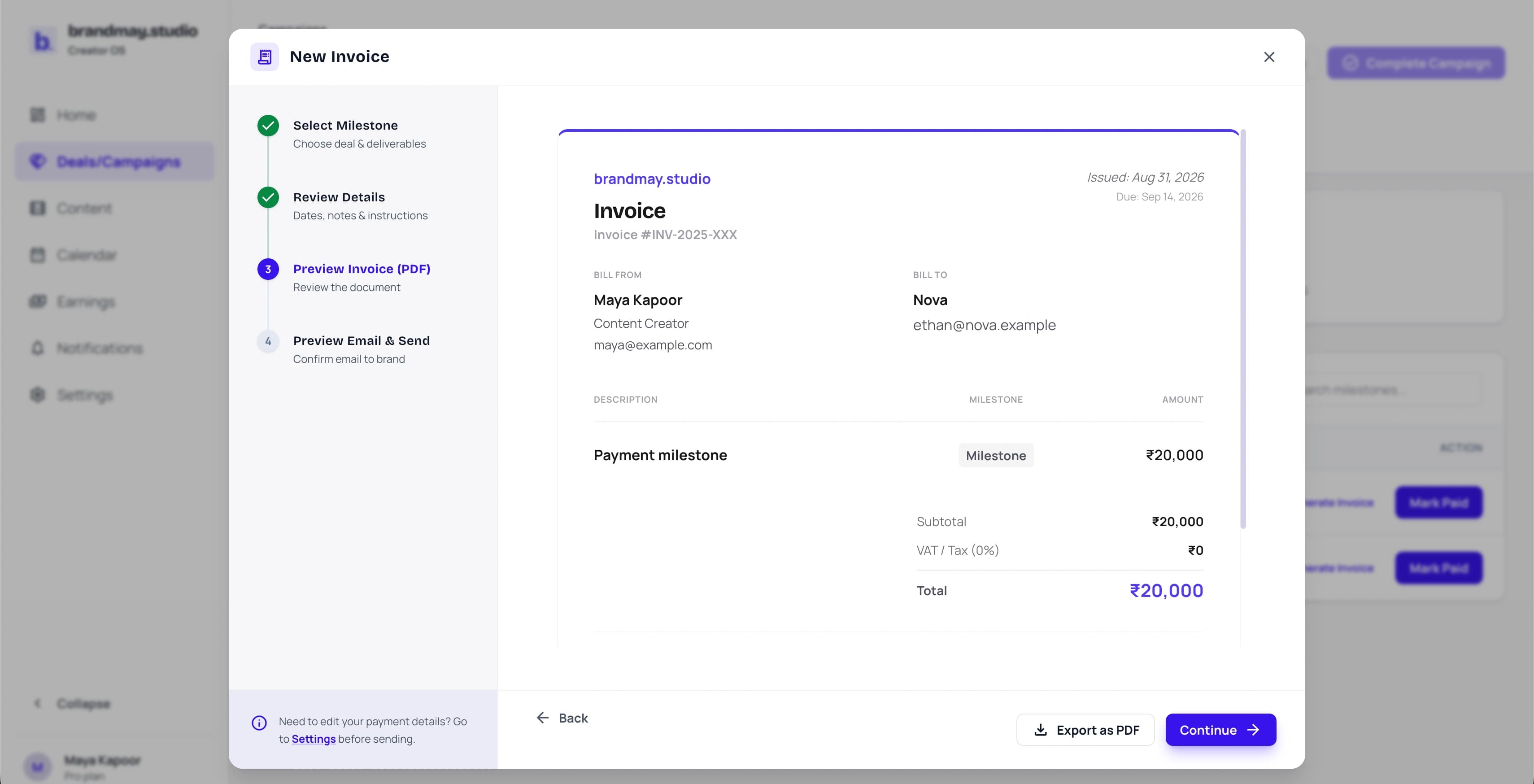
Create or attach the invoice, then record when it was sent. Track expected payment dates and milestone amounts instead of relying on memory.
Use Earnings to see what is expected, overdue, partially paid, or paid. When money arrives, record the received payment rather than treating “invoice sent” as the end of the workflow.
7. Handle shared campaign changes carefully
When a creator and brand are both active participants, changes to shared commercial terms may require the other side’s acceptance. Review the proposed title, brief, dates, compensation, deliverables, draft milestones, or barter terms before accepting.
Rejecting or revoking a proposal leaves the canonical campaign unchanged. Lifecycle actions such as your creator-side archive remain separate from negotiated commercial terms.
8. Complete without losing history
Mark the campaign complete when its work and financial outcome are truthful. Archive it when it no longer needs to occupy the active workflow.
Keep the campaign record useful for future questions:
- What was agreed?
- Which version was approved?
- Was the invoice sent?
- When was payment expected?
- Was the payment received?
Weekly creator routine
Once a week:
- Check overdue payments.
- Check deliverables due in the next seven days.
- Publish finished drafts that are still waiting locally.
- Read new brand feedback.
- Send invoices for completed work.
- Follow up on late payments.
- Archive campaigns that are genuinely finished.
Next step
Add the collaboration you are currently managing in messages or memory, even if every term is not final yet.
Related guides:
Your next action
Put your next collaboration step into one clear workflow.
Start with the campaign or payment that needs attention today.